


Working in a greenhouse: everything you need to know in 2026
The Netherlands is one of the largest producers of flowers and plants in the world, and Dutch greenhouses form the foundation of this industry. In modern, heated greenhouses, tulips, roses, orchids, and bulbs are grown all year round. This requires a lot of hands.
Are you looking for practical work that is clear and doesn’t usually require a diploma? Then working in a greenhouse in 2026 is a smart and stable step. We understand that moving to work in another country can feel like a big step, especially if you’re not sure what to expect. This article is meant to give you an honest picture of the job. What do you do all day? What is the salary? And is the work really that physically demanding? Discover whether greenhouse work in the Netherlands is right for you.
What does working in a greenhouse involve?
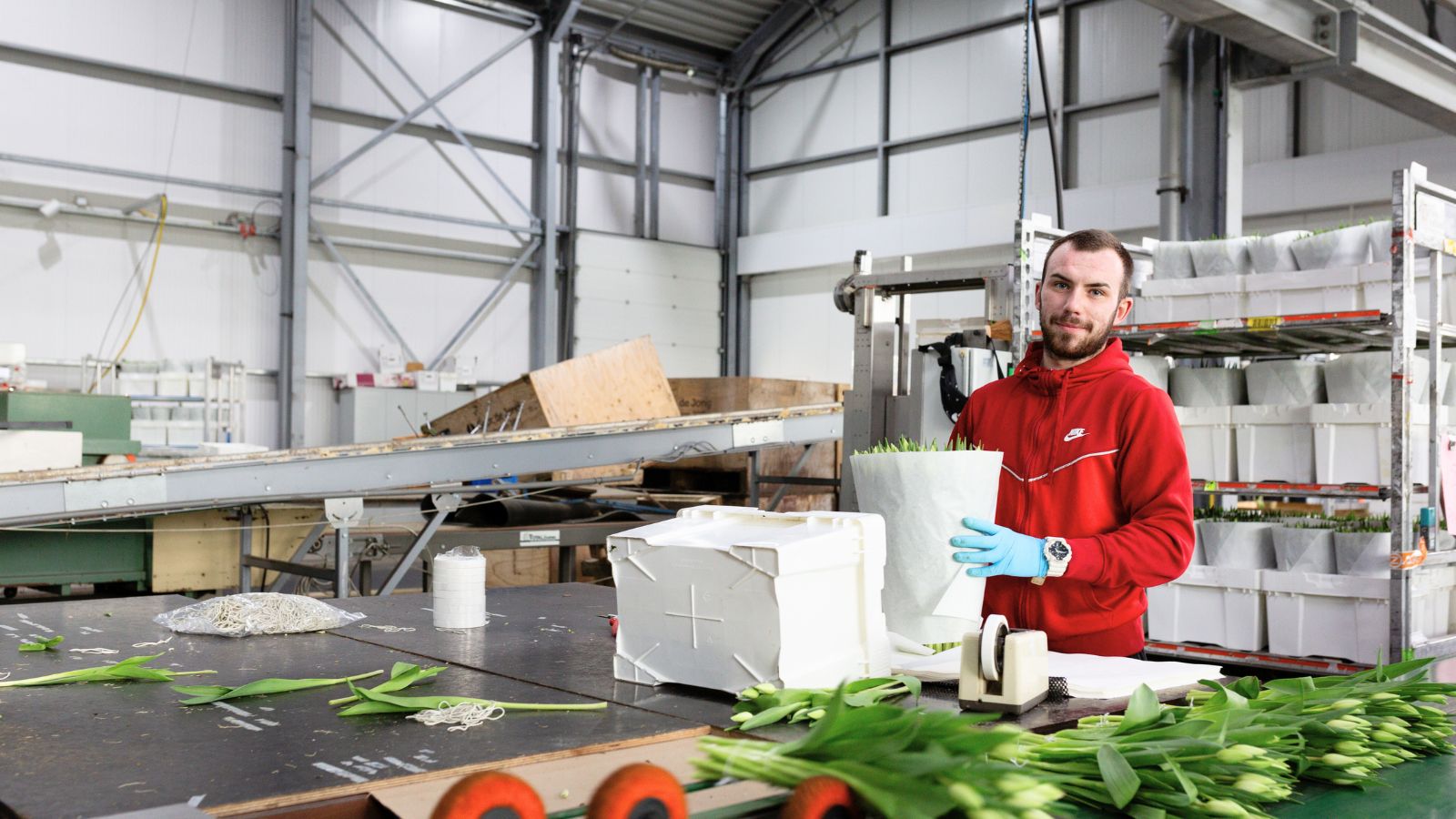
Working in a greenhouse means performing practical tasks in the horticulture sector. Your exact duties depend on the type of company and the season. One day you may focus on plant care, while another day is more about sorting or packing.
Common tasks in Dutch greenhouses include:
- Planting cuttings and seedlings
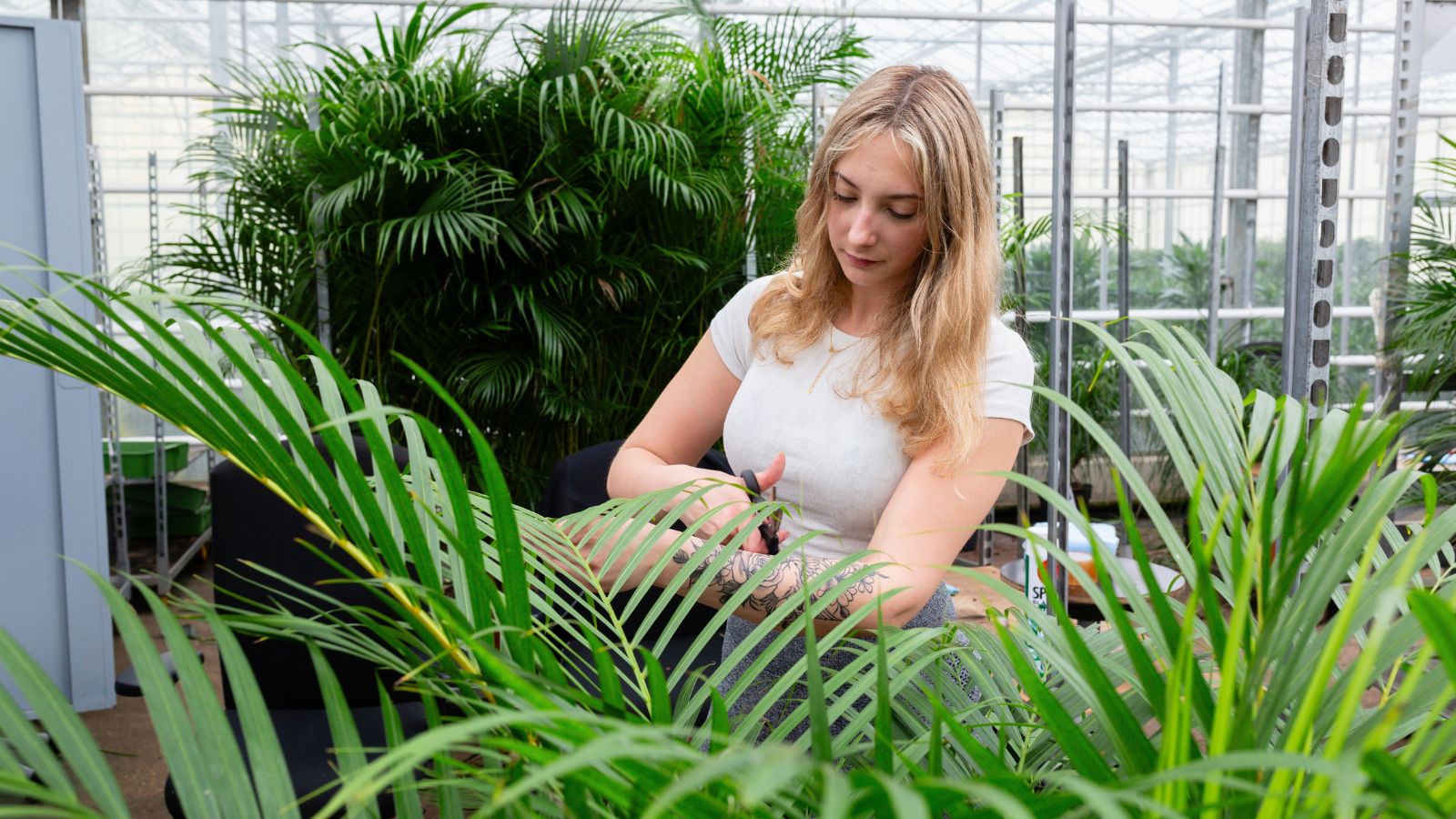
- Caring for plants: watering, pruning, removing dead leaves, checking for diseases
- Harvesting flowers
- Sorting products and assessing quality and size
- Packing and preparing orders for shipment
- Operating simple machines (conveyor belts, sorting machines)
- Keeping the greenhouse clean and organised
The basic tasks (cutting, sorting, packing) can be somewhat repetitive. However, because you often switch tasks, the pace is high during busy periods, and you work as part of a team, most greenhouse workers do not experience the job as boring.
Is greenhouse work in the Netherlands physically demanding?
Greenhouse work is physical, but not heavy in the sense of lifting extreme weights. You will spend a lot of time standing and walking, and some tasks involve bending or reaching. In your first weeks, you may experience some discomfort in your legs or lower back, especially if you work in the same position for long periods. This is normal and usually improves within two weeks. Good work shoes and regular stretching can make a big difference.
Are you working through ABflexkracht in the floriculture sector? Then the temperature in the processing area or cold storage may be lower than you are used to, sometimes around 3 to 10°C, to keep the flowers fresh. In those workplaces, suitable warm work clothing is always provided.
Because many greenhouse roles require fine motor skills and precision rather than heavy lifting, the work is accessible to a wide range of people. The horticulture sector attracts many female workers due to the regular day shifts and relatively light physical work. Read more about Working in the Netherlands for women →

Greenhouse work vs. warehouse work: what suits you best?
Many people coming to the Netherlands from the EU to work hesitate between greenhouse work and warehouse work. Both roles are accessible and do not require a diploma. So what’s the difference?
- In a greenhouse, you work with living products, often in daylight and at a controlled temperature. The work is structured and mainly done by hand.
- In a warehouse, the pace is usually higher, you walk more kilometres (10 to 15 km per day), and you work a lot with scanners, forklifts, and shelving systems.
In terms of salary, both roles are quite similar. Do you prefer more action and technology? Then read our article about working as an order picker. Do you prefer working with plants and a calmer rhythm? Then keep reading below.
Types of greenhouse work in the Netherlands: flowers, vegetables, or plants?
When people think of greenhouse work in the Netherlands, they often think of tomatoes, peppers, or cucumbers. That’s partly true, but the picture is broader than that. In general, there are three types of greenhouse companies in the Netherlands: flowers, plants, and vegetables. In practice, ABflexkracht vacancies are mainly in and around flower growing, plant cultivation, and young plant production.
Flower growers
In flower nurseries, tasks include cutting, sorting, bunching, quality control, and preparing products for shipment. The pace can be high, especially during peak periods, and many people actually enjoy this because the day goes by quickly. Through ABflexkracht, you may work with cut flowers such as gerberas, roses, hydrangeas, peonies, lilacs, snowball viburnum, and ilex. In early spring, also tulips.
Plant nurseries and potted plants
These greenhouses grow houseplants, bedding plants, and young plants (cuttings). Through ABflexkracht, you may work in this sector with crops such as Ficus, orchids, African violets, bromeliads, cacti, and succulents. Tasks include potting, transplanting, trimming, and packing. The spring season (March–June) is usually the busiest period, when garden centres restock their inventory.
→ Good to know: ABflexkracht vacancies are mainly with flower growers and plant nurseries. If you specifically want to work in vegetable cultivation, we can sometimes help, but our expertise and network are mainly in floriculture.
What does a workday in a greenhouse look like?
A typical workday in a Dutch greenhouse starts early, usually between 7:00 and 7:30 AM. You begin your day by receiving instructions about the schedule, finding out which tasks have priority, and learning which product or crop you will be working with.
Once everyone is up to speed, you dive into your work. Greenhouse work is highly varied; depending on the planning, you might spend your morning cutting, sorting, processing cuttings, or checking plants. There are always regular coffee and lunch breaks scheduled to help you recharge.
In the afternoon, the dynamic often changes. You might switch to different responsibilities, moving from harvesting to packing or doing quality control, before you clean up your workspace to end the day.
Most greenhouse jobs are full-time (37.5 – 40 hours per week), from Monday to Friday. Overtime and weekend work may occur during busy periods and are naturally compensated at a higher rate.
“After more than eleven years in the green sector, I now know everything about orchids. The work is great, and at this nursery the communication is very clear, which really helps the atmosphere. The best thing about working through ABflexkracht? Everything simply runs smoothly, and if something comes up, I can easily discuss it in Polish with my coordinator.”
– Ewa, employee at an orchid nursery (via ABflexkracht)

Do you need experience or a diploma?
For many entry-level greenhouse jobs, you don’t need a diploma or prior experience. You usually learn the work on the job. What matters most is that you are motivated, reliable, and willing to do active work.
Speaking Dutch is not required for many greenhouse roles. Teams in greenhouses often consist of workers from Poland, Romania, Bulgaria, and other EU countries. Supervisors speak English or Polish, and tasks are often demonstrated in your own language. Also explore the possibilities for working in the Netherlands without speaking Dutch →
Tip: do you have a category B driving licence or previous experience in horticulture? Make sure to mention it. It can give you an advantage and possibly a higher starting salary.
How much do you earn with greenhouse work in the Netherlands in 2026?
In 2026, the statutory minimum wage in the Netherlands for employees aged 21 and over is €14.99 gross per hour (as of 1 July 2026, source: Rijksoverheid.nl). This is the legal minimum. Many greenhouse workers earn more, depending on experience, the type of work, and the collective labour agreement (CAO) of the employer.
| Experience level | Gross hourly wage (2026) | With overtime allowance (35%) |
|---|---|---|
| Starter (scale B, 21+) | €14.99 – €15.61 | €20.24 – €21.07 |
| Experienced / more complex roles (scale C+) | €15.50 – €17.50 | €20.93 – €23.63 |
Salaries are based on the Greenhouse Horticulture Collective Labour Agreement (CAO) 2025–2026 (source: Glastuinbouw Nederland). As of 1 January 2026, temporary workers are entitled to the same pay as permanent employees in the same sector. At ABflexkracht, we comply with these rules.
On top of your hourly wage, you receive:
- 8.33% holiday allowance, usually paid in May
- Overtime compensation (the Greenhouse Horticulture CAO applies a 35% overtime allowance, meaning 135% of your hourly wage)
- Allowances for evening, night, or weekend shifts
- Pension accrual through StiPP (from 1 January 2026, the gross pension contribution is 23.4% of the pension base, of which 15.9% is paid by the employer and 7.5% by the employee)
Fair pay through a staffing agency
A common misconception is: “You earn less through a staffing agency.” That’s not true. As of 1 January 2026, temporary workers are entitled to the same pay as permanent employees in the same sector. At ABflexkracht, we comply with these rules. In addition, you receive holiday allowance, pension accrual, and any applicable allowances on top of your hourly wage. Read more about the ABU CAO and your rights in 2026.
Curious about the specific rules and benefits for your situation? Read: What does a Polish worker earn in the Netherlands in 2026?
Housing and transport: what is arranged?
If you work through ABflexkracht as an EU temporary worker, we arrange comfortable, certified housing for you. All our accommodations meet the SNF quality standards. In practice, this means: your own sleeping space (maximum of two people per room), a clean kitchen and bathroom, proper heating, and Wi-Fi. SNF carries out annual unannounced inspections to ensure these standards are maintained.
Housing costs are deducted from your salary, usually up to a maximum of 25% of your gross wage. You don’t need to search for accommodation yourself, since everything is ready when you arrive.
- Are you coming to the Netherlands with your partner? We do our best to arrange shared housing so you can live together. Read more about our housing, or discover how to live and work in the Netherlands right away in 2026 through us.
- Transport to your workplace is also arranged. Depending on the distance, you will receive a bicycle or a company car, free of charge. Do you have your own car and does your employer’s CAO include a mileage allowance? Then you will receive travel compensation.
Beforehand, we clearly explain which housing and transport arrangements apply to your situation, what costs are involved, and what you can expect.
Also read: Travelling to the Netherlands for work: how it works at ABflexkracht!
When is greenhouse work available?
A common misconception about greenhouse work is that you’ll be without work during the winter. The big advantage of Dutch greenhouse horticulture is that work in heated greenhouses continues all year round, regardless of rain, wind, or cold.
That said, the floriculture sector does have clear seasonal peaks. Here’s what the year typically looks like:
- Spring (March–May): This is the busiest season. Flower production peaks around International Women’s Day, Easter, and Mother’s Day. It’s also the time when bedding plants and young cuttings are shipped to garden centres across Europe. If your goal is to work many hours and earn extra money through overtime, this is a great time to start.
- Summer (June–August): Work in flower and plant cultivation continues steadily, in a comfortable climate. Because many permanent seasonal workers return to their home countries for holidays, there are plenty of job opportunities during these months.
- Autumn (September–November): Work continues steadily in many greenhouses. The bulb season (such as amaryllis and tulips) begins to ramp up. While outdoor workers often lose hours due to rain, you are guaranteed consistent indoor work.
- Winter (December–February): While it’s freezing outside, inside temperatures are a comfortable 18–22°C. Orchid and rose growers often work overtime during this period to supply flowers for the Christmas season and Valentine’s Day (February 14).
And if things do slow down at your current workplace? ABflexkracht actively looks for alternative work for you, often at another nursery or in logistics. You won’t be left without income.
“I came to the Netherlands from Poland years ago to earn money quickly, but I’ve now been working here for over 15 years. I started as a general worker and later, through ABflexkracht, trained to become a crop specialist in greenhouse horticulture. If you’re motivated and want to grow, this sector really offers plenty of opportunities.”
– Adam, crop specialist at a young plant nursery (via ABflexkracht)
How do you get started with ABflexkracht?
Ready to start working in a Dutch greenhouse? Here’s how it works at ABflexkracht:
Step 1: Register online. Fill in the registration form on our website and upload your CV. This takes about 5 minutes.
Step 2: We contact you. One of our coordinators will call you to discuss your experience and preferences.
Step 3: We find you a job. Based on your skills and availability, we match you with a greenhouse company in our network.
Step 4: We arrange everything. Housing, health insurance, transport, your employment contract. We make sure everything is arranged before you start.
Step 5: Start working. You can often start as early as the following week. On your first day, you’ll receive a proper introduction, and your supervisor will clearly show you what to do.
About ABflexkracht
ABflexkracht is a Dutch cooperative with more than 55 years of experience in the green sector. We connect workers from all over Europe with leading employers in horticulture, engineering, logistics, and production in the Netherlands. We are ABU-certified, SNF-certified for housing, and registered with the SNA. Our team speaks Dutch, English, Polish, Bulgarian, and German.
Written by Joanna, senior recruiter at ABflexkracht. Joanna has many years of experience guiding new workers to the right job within Dutch greenhouse horticulture. This article is based on more than 55 years of experience in placing workers at Dutch greenhouse companies.
Gerelateerde verhalen
What will you earn as an EU-worker in the Netherlands in 2026?
Are you an EU citizen considering working in the Netherlands? This…

Work in the Netherlands for women: ABflexkracht has it!
Would you like to work in the Netherlands as a woman? You might thi…

New collective labor agreement (cao) for temporary workers in 2026: what will change in the Netherlands?
From January 1, 2026, significant changes will take effect for temp…
Working and Living in the Netherlands Immediately in 2026: how to secure a comfortable home right away
Are you ready to start working immediately and want to ensure a com…